
Real Estate Partners by Real BrokerREPYYC · PRPTY
Get pre-approved ↗info@prpty.ca587-355-1774
St. Andrews Heights homes & housing

What the homes in St. Andrews Heights are really like.

A practical look at construction, renovation, lots, ownership and the details that separate one home from the next.

St. Andrews Heights community in Calgary
inner-city Calgary community

St. Andrews Heights brings established streets, renovation and reinvestment into the same property conversation.

St. Andrews Heights is an inner-city market where established housing, renovation and redevelopment can create distinct comparison sets on neighbouring streets.

Frontage, orientation, land use, build quality, effective age and surrounding redevelopment often matter more than one community-wide average.

Inner-city CalgaryEstablished homesInfill contextLot and block analysisRenovation history
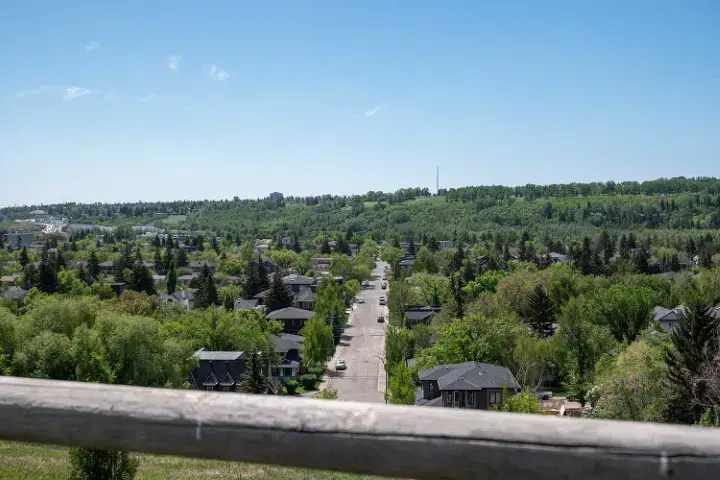
A residential street in St. Andrews Heights
Inside the homes

What to look for in a St. Andrews Heights property.

Construction, improvements and site details translated into practical buyer and seller questions. For St. Andrews Heights, keep established detached housing in the same decision as inner-city routes and services. Nearby alternatives in the same decision can include University Heights and Parkdale.

01

Established detached housing

Start by identifying the property form and effective age. Permit and effective-age history. For St. Andrews Heights, keep renovated and substantially updated homes in the same decision as neighbourhood parks and gathering places. Nearby alternatives in the same decision can include Parkdale and Hounsfield Heights/Briar Hill.

02

Renovated and substantially updated homes

Compare like with like, including shared-property obligations where they apply. Land-use and development context. For St. Andrews Heights, keep attached or infill options in the same decision as multiple commuting options. Nearby alternatives in the same decision can include Hounsfield Heights/Briar Hill and Brentwood.

03

Attached or infill options

Separate cosmetic presentation from documented work on structure, envelope and systems. Site orientation and neighbouring projects. For St. Andrews Heights, keep different lot and redevelopment contexts in the same decision as a street-by-street residential experience. Nearby alternatives in the same decision can include Brentwood and University Heights.

04

Different lot and redevelopment contexts

Lot, access, parking and immediate surroundings can change how the home lives. Property-specific comparable sales. For St. Andrews Heights, keep established detached housing in the same decision as inner-city routes and services. Nearby alternatives in the same decision can include University Heights and Parkdale.

Construction and renovation context

Read the effective age, not just the year built.

A well-documented renovation can change how a home lives and how it should be compared. A beautiful finish without records leaves different questions. Start with structure, envelope, mechanical systems and site, then move into design and décor.

01

Established detached housing

Start by identifying the property form and effective age. Permit and effective-age history.

02

Renovated and substantially updated homes

Compare like with like, including shared-property obligations where they apply. Land-use and development context.

03

Attached or infill options

Separate cosmetic presentation from documented work on structure, envelope and systems. Site orientation and neighbouring projects.

04

Different lot and redevelopment contexts

Lot, access, parking and immediate surroundings can change how the home lives. Property-specific comparable sales.

Historical housing context

The community’s building eras, kept in perspective.

385 occupied private dwellings were reported as single-detached houses in the 2021 Census profile (66%); 125 row houses represented another 21%.

St. Andrews Heights’ largest reported construction cohort was 1960 or before with 205 occupied private dwellings (35%), followed by 1961 to 1980 with 190 (32%).

See the complete dated community profile →

Buying in St. Andrews Heights

Get the mortgage plan in place before the right home appears.

Pre-approval helps turn the search into a workable range, but the property still has to fit the lender, the buyer’s cash plan and the cost of any near-term work.

01

Established detached housing

Start by identifying the property form and effective age. Permit and effective-age history.

02

Renovated and substantially updated homes

Compare like with like, including shared-property obligations where they apply. Land-use and development context.

03

Attached or infill options

Separate cosmetic presentation from documented work on structure, envelope and systems. Site orientation and neighbouring projects.

Current St. Andrews Heights homes

Compare current St. Andrews Heights homes

Browse the dedicated HomesForSaleNearMe community search, then bring a specific address back to Dusko and the team for status confirmation and a property-level review.

Complete housing evidence pack

Five layers behind the St. Andrews Heights comparison.

Layer 1

Dwelling forms

  • Single-detached house: 385 occupied private dwellings (66%) in the 2021 Census profile.
  • Row house: 125 occupied private dwellings (21%) in the 2021 Census profile.
  • Apartments in buildings with fewer than five storeys: 55 occupied private dwellings (9%) in the 2021 Census profile.
  • Apartment or flat in a duplex: 15 occupied private dwellings (3%) in the 2021 Census profile.
Layer 2

Construction periods

  • 1960 or before: 205 occupied private dwellings (35%); use this as historical community context, not the age of a listing.
  • 1961 to 1980: 190 occupied private dwellings (32%); use this as historical community context, not the age of a listing.
  • 2016 to 2021: 45 occupied private dwellings (8%); use this as historical community context, not the age of a listing.
  • 1981 to 1990: 40 occupied private dwellings (7%); use this as historical community context, not the age of a listing.
  • 2001 to 2010: 40 occupied private dwellings (7%); use this as historical community context, not the age of a listing.
  • 2011 to 2015: 40 occupied private dwellings (7%); use this as historical community context, not the age of a listing.
Layer 3

Lot and site questions

  • Compare the exact St. Andrews Heights parcel for dimensions, orientation, grade, access, easements and neighbouring context; the community profile does not describe those property-level attributes.
  • Review the survey or real property report, current land-use record and title before making a redevelopment, parking, access or boundary assumption.
Layer 4

Renovation and redevelopment

  • Match the inspection and document plan to the subject property's actual construction, additions and effective age rather than the community's largest Census-era cohort.
  • Ask for permits, plans, warranties, invoices and material-renovation records where applicable, then distinguish documented work from cosmetic presentation.
Layer 5

Condominium or association context

  • For any condominium or managed-property form, review the corporation or association documents, insurance, financials, reserve planning, rules, parking, storage and unit obligations.
Explore the guides

Choose your next step in St. Andrews Heights.

Compare the community, the type of home and the property-specific details in the order that makes sense for your move.

Quick answers

What buyers and sellers ask about St. Andrews Heights.

Start with the practical questions, then open the detailed guide that matches the property or decision in front of you.

01

What housing form should a St. Andrews Heights comparison start with?

385 occupied private dwellings were reported as single-detached houses in the 2021 Census profile (66%); 125 row houses represented another 21%.

02

Why does construction period matter in St. Andrews Heights?

St. Andrews Heights’ largest reported construction cohort was 1960 or before with 205 occupied private dwellings (35%), followed by 1961 to 1980 with 190 (32%). The date helps shape inspection questions but does not establish effective age after renovation or replacement work.

03

What ownership documents may matter in St. Andrews Heights?

365 private households were reported as owner households (62%) and 220 as renter households (38%) in 2021.

04

What is the most important property-level check?

Identify address-specific water, drainage, slope, noise, traffic, construction, fire, environmental or insurance questions relevant to the St. Andrews Heights property; do not generalize an exposure to every home.

Official referencesGovernment and official records used for local context3 references +

Official records provide dated community context. Current listing status and conclusions about one property still require the applicable live record and property documents.

Talk with the St. Andrews Heights team

Ready to search, sell or ask about a property?

Dusko Sremac is the primary contact, backed by Real Estate Partners by Real Broker.

587-355-1774Private consultation
St. Andrews Heights marketView report